How long a bathroom remodel actually takes in Suffolk County — start to finish.
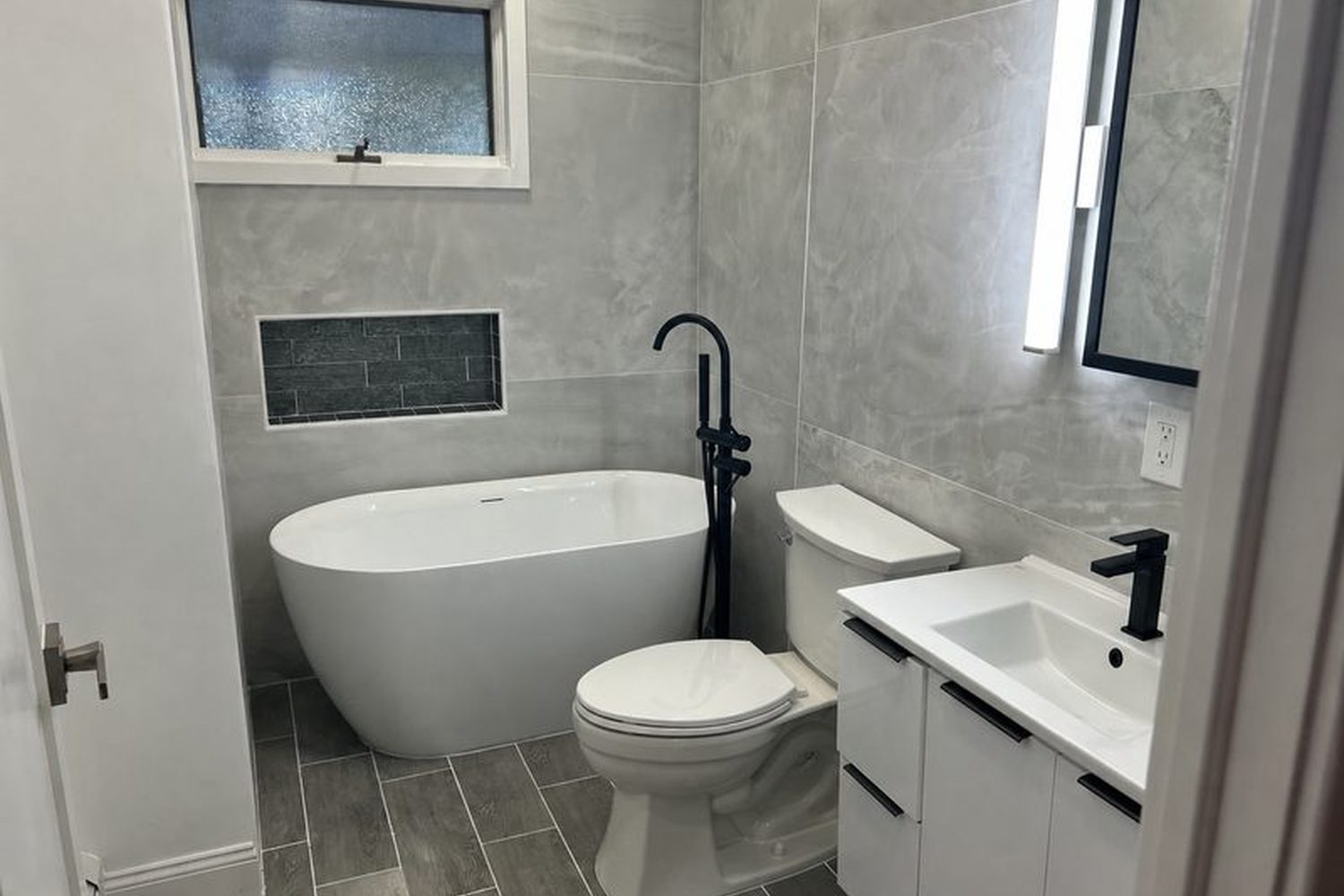
When homeowners ask how long a bathroom remodel takes, the real question underneath is usually different: how many mornings am I going to be brushing my teeth at the kitchen sink? On Long Island that question has real teeth, because so much of the housing stock is post-war capes and 1950s ranches built with exactly one full bathroom. Lose it for a month and the whole household feels it.
So here's an honest breakdown of how long a bathroom remodel actually takes in Suffolk County: the realistic range, what happens in each stretch, and the specific things that turn a tidy three weeks into an open-ended one.
The honest range: two to six weeks, and why it's so wide.
A cosmetic refresh (new vanity, toilet, fixtures, paint, maybe a re-glazed tub, with nothing moving behind the walls) can wrap in about two to three weeks. A full gut, where the tile comes off, the plumbing gets reworked, and the layout changes, typically runs four to six weeks. The gap between those two numbers is almost entirely about how much lives inside the walls, and how much of it you're disturbing.
Two things stretch a bathroom more than people expect. The first is that a bathroom is small but dense: plumbing, electrical, waterproofing, and tile all stack into a room the size of a closet, and most of those steps have to happen in order, with drying and curing time in between. The second is inspections. Move a drain or add a circuit and the work has to be signed off before it gets covered, which ties part of your schedule to a town inspector's calendar rather than your crew's.
Week by week: what's actually happening in there.
Every job is a little different, but a full Suffolk County bathroom remodel tends to move through the same phases in roughly this order.
- Demolition and haul-out (1 to 2 days). Old tile, tub, vanity, and toilet come out, down to the studs and subfloor. This is the loud, dusty part, and it's also when the surprises show up: a soft subfloor, a rotted stud, or old galvanized pipe that should really be replaced while it's exposed.
- Rough plumbing and electrical (2 to 4 days). Drains, supply lines, and vents get reworked, and the electrician updates wiring, adds the outlets and the exhaust fan the room actually needs, and brings older wiring up to current code. If you're relocating the shower, sink, or toilet, this is the phase that grows.
- Inspection (schedule-dependent). Before anything gets closed up, the rough plumbing and electrical are inspected. This isn't a delay you control. You're in the queue with everyone else who pulled a permit that week.
- Waterproofing and tile (4 to 8 days). Backer board, waterproofing membrane, then tile, which is the patient part of the job. Thinset and grout need to cure, large-format and mosaic layouts take longer to set, and rushing this step is exactly how you end up with a leak two winters later. On most jobs this is the single longest stretch.
- Fixtures, vanity, and finish (3 to 5 days). Tub or shower glass, toilet, vanity, faucets, mirror, lighting, and paint go in. The room finally looks like a bathroom again.
- Final inspection and punch list (1 to 2 days). A final sign-off where a permit required one, then the small stuff (caulk lines, a sticking drawer, touch-up paint) that separates "usable" from "done."
What stretches the timeline (and what you can control).
The range is wide because a handful of specific factors push jobs toward the long end. Knowing them ahead of time is how you keep your project near the short end.
- Moving the plumbing. Keeping the toilet, sink, and shower roughly where they are is the single biggest timesaver. Relocating a drain means opening the floor, and in a slab-on-grade ranch that's a bigger operation than in a cape with a basement or crawlspace underneath.
- Special-order materials. A stock vanity and in-stock tile keep things moving. A custom vanity, imported tile, or a made-to-order shower door can carry lead times of several weeks, and the job waits on whatever shows up last. Order early, before demo rather than during it.
- What's behind the walls in an older home. On the pre-war and post-war homes common across Northport, Smithtown, and Babylon, opening a wall can reveal cast-iron waste lines, a shower with no vent, knob-and-tube remnants, or a subfloor that's been quietly rotting under a leaking pan. None of it is unusual, and all of it adds days once it's found.
- Permits and inspection scheduling. This is real time you should build into the plan, not a formality. Reworked plumbing, gas, and electrical typically need a permit and an inspection before the walls close. The Town of Babylon Building Department handles that sign-off for Babylon homeowners, and the Town of Smithtown's online residential permit system does the same in Smithtown, with Islip running its own department. A good contractor files early and schedules inspections so the crew isn't standing around waiting.
The one-bathroom problem, and how to plan around it.
If your house has a second bathroom, a remodel is an inconvenience. If it has one, which describes a lot of Long Island capes and smaller ranches, it's a logistics puzzle you want to solve before the first tile comes off. You are not without a toilet for the whole project, but there are specific stretches where the room is unusable, and it helps to know which ones.
Practical moves that make a one-bath remodel survivable:
- Ask your contractor to sequence for a usable toilet. The toilet is often one of the first things out and one of the last back in, but a crew that knows it's your only bathroom can sometimes keep a working toilet in place longer, or reset it temporarily.
- Line up a backup before you need it. A relative or neighbor in Bay Shore or Commack, a gym membership for showers, or in a longer gut, a portable option on site. Sort it out before demo week, not the morning of.
- Get the shut-off days in advance. Water gets cut for specific tasks, not the whole job. A heads-up the day before lets you plan around it instead of discovering it at 6 a.m.
Best time of year to schedule it on Long Island.
A bathroom is an indoor job, so it can run in any season, but the calendar still nudges the timeline. Spring and summer are the busiest stretch for good crews here, which means booking further out even if the work itself goes fast once it starts. Late fall and winter often bring shorter lead times, and since you're not depending on outdoor weather, a January bathroom is perfectly reasonable. The one thing worth avoiding is tearing your only bathroom apart the week you're hosting family for the holidays.
The honest headline: plan for four to six weeks on a full gut, hope for less, and build in room for the inspection queue and whatever the walls are hiding. A contractor who gives you a specific week-by-week schedule up front, and warns you where it could slip, is worth more than one who promises a number that sounds good on the phone.
When you're mapping out your own project, it helps to also understand what actually drives the cost of a bathroom remodel and, if you're squeezing a full redo into a compact footprint, these small bathroom ideas that make the most of the space. And before you start, it's worth knowing which permits Islip, Smithtown, and Babylon each want. When you're ready to talk specifics, our bathroom remodeling crews work across Islip, Northport, Smithtown, Babylon, Bay Shore, Commack, and Huntington, and we'll tell you honestly what your weeks are going to look like.