Fogged glass in a Northport window: a failed seal, or time to replace the unit?
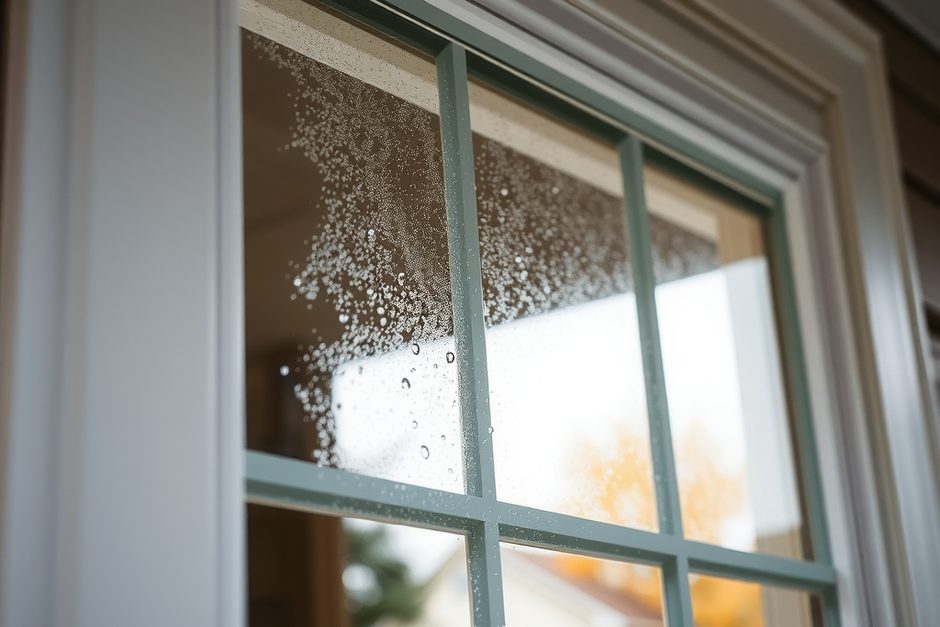
If the haze is trapped between the panes, cleaning either side will not touch it. For a Northport homeowner deciding whether to call for a repair or start comparing new windows, the first job is to separate a failed insulated-glass seal from ordinary indoor condensation, damaged sash hardware, or a window opening that has started to leak.
First, make sure the moisture is actually between the panes.
Fogging between two panes means the insulated-glass unit has lost its seal. Moisture can collect in the sealed air space where you cannot wipe it away. Condensation on the room side is different: it forms when humid indoor air meets cold glass and may disappear as the room warms or dries out.
Try the simple checks before making a decision. Wipe the inside surface, then look at the outside surface from a dry angle. If both are clear but the haze remains, it is inside the glass unit. Notice whether it comes and goes with weather, whether the blinds stay damp, and whether the sash still locks and slides normally. Those details tell you whether you have one glass problem or a broader window problem.
A failed seal does not automatically mean a whole new window.
When the frame, sash, weatherstripping and surrounding trim are sound, replacing the insulated-glass unit can be the sensible repair. A glass specialist measures the visible glass and the sash, then confirms how the panes are held in. That route keeps the existing frame in place and addresses the part that has actually failed.
It is worth inspecting the frame before choosing that route. Check the lower corners for soft wood, peeling finish, gaps at the trim, a sash that drags, or a lock that will not pull the meeting rails tight. On a post-war Long Island cape, one original window may have a failed seal while the neighboring units show worn balances and tired weatherstripping. Replacing only the glass in a window that will not close tightly solves the view but not the draft.
Look at the opening, not only the cloudy glass.
A fogged pane is a glass-unit problem, but water marks, soft trim or recurring drafts point to the opening around it. Follow the water and air paths before ordering a sash or a full replacement. On older Northport homes, original trim and later replacement windows can meet in ways that hide the real source of the problem.
- Clear glass, damp room-side surface: Manage indoor humidity and look for cold-air leakage around the sash.
- Haze that stays between panes: Ask whether the insulated-glass unit can be replaced in the existing sash.
- Soft trim, staining or loose exterior cladding: Investigate the opening before installing new glass.
- Several cloudy units plus hard operation: Compare a broader window replacement plan with repeated small repairs.
Energy performance matters when several units are due.
If more than one window is failing, the decision shifts from a single repair to how the house performs as a whole. New glass can restore clarity, but it will not change frame leakage or a sash that no longer closes square. Compare complete units, installation details and the rooms that are hardest to keep comfortable.
ENERGY STAR's homeowner guidance is a useful starting point for comparing energy improvements without guessing from a showroom label. New York homeowners can also review NYSERDA's resident resources for current home-energy programs and ways to plan an improvement. Use those resources to ask better questions, then have the actual opening evaluated before selecting a replacement.
Why Long Island weather makes a small seal failure easier to notice.
Long Island's humid summers and cold winter nights make a compromised unit hard to ignore. A pane that looks hazy in mild weather can show droplets when the temperature swings, while a west-facing room may make a failing seal obvious in afternoon light. Seasonal change often reveals a seal failure that has been developing quietly.
Fall is a good time to inspect the whole window before the heating season. Open and lock each sash, look for daylight at the weatherstripping, and check the lower trim after a hard rain. Do not cover a recurring draft with temporary film and assume the cloudy pane is the only issue. A clear scope starts with knowing whether the repair is glass, sash, frame, or the opening itself.
How to decide before requesting a written quote.
Choose a glass-only repair when the problem is isolated and the sash, frame and opening are in good shape. Consider a full-unit replacement when several windows have failed, operation is poor, the frame has deteriorated, or the opening needs work. Affected windows, access, trim condition and work behind the cladding all affect the scope.
Photograph the fogged glass from inside and outside, then note any drafts, stains or operating issues. That gives a contractor a better starting point than a description of a cloudy window alone. For a Northport or Long Island home, Just Enterprise One Corp. can inspect the condition and provide a free written quote within one to two business days. Call (631) 983-8079, or see our window services and our guide to window replacement on Long Island.