Wood flooring vs. tile: which is right for your Long Island home?
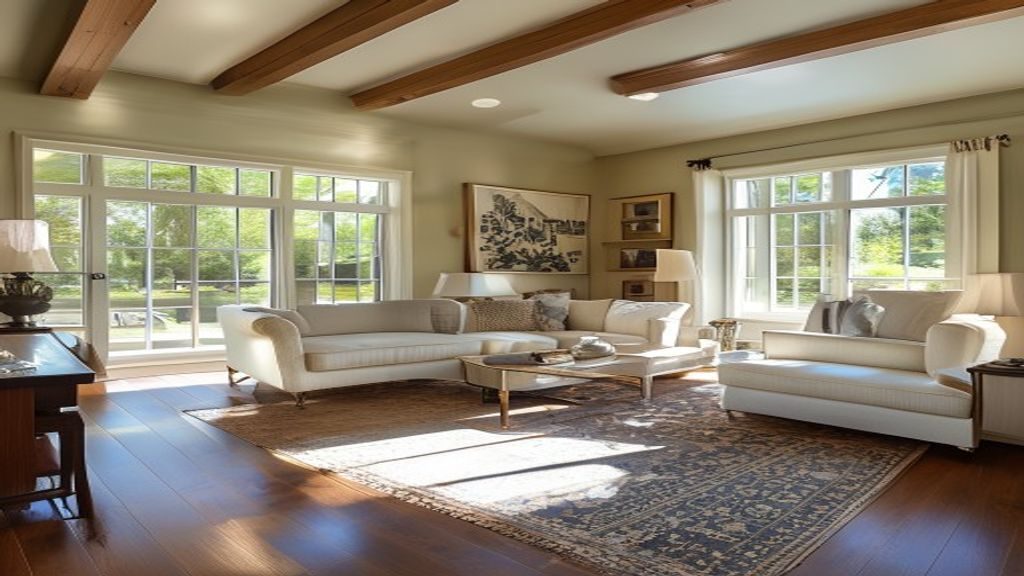
The question we get on nearly every renovation estimate.
When homeowners are planning a renovation — whether it's a full gut or a first-floor overhaul — flooring choice consistently comes up as one of the most agonized decisions. Wood and tile both have fierce advocates, and both have legitimate strengths depending on the room, the household, and the budget. Here's a clear-eyed comparison based on what we actually see working well (and failing) in Long Island homes.
Where hardwood wins.
Solid hardwood and engineered hardwood are the dominant premium flooring choice in Long Island living rooms, dining rooms, bedrooms, and hallways. The case for wood is strong in these areas:
- Warmth underfoot: Wood floors are dramatically more comfortable than tile in cooler months — a real quality-of-life difference in a home you live in year-round.
- Resale value: Real hardwood floors consistently score high with home buyers in Suffolk County. Real estate agents routinely cite hardwood as one of the top ROI flooring investments.
- Refinishability: Solid hardwood can be sanded and refinished 3–5 times over its lifetime, effectively restoring a 40-year-old floor to like-new condition. Engineered hardwood can usually be refinished once or twice depending on the veneer thickness.
- Visual continuity: A continuous hardwood floor flowing through an open floor plan creates a unified, expansive feel that individual tiles struggle to replicate.
What drives the cost: Species is the biggest lever — domestic red and white oak sit at the affordable end, while walnut and wide-plank material sit well above it. Board width, grade, finish (site-finished vs. prefinished), subfloor condition, and how much stair and threshold work the job includes all move the number too. Engineered hardwood generally lands below solid for comparable looks. We price flooring by the room, not by a rule of thumb — call (631) 983-8079 and we'll measure and put a free written quote in your hands.
Where tile wins.
Tile is the unambiguous right choice in wet and high-moisture areas, and a strong contender in other spaces depending on your priorities:
- Bathrooms and laundry rooms: Non-negotiable. Wood and water are a bad combination — even engineered wood should not be installed in full baths. Large-format porcelain tile is durable, waterproof, and available in beautiful natural stone looks.
- Kitchen floors: Tile is a legitimate choice in kitchens, especially for households that do serious cooking and expect spills, dropped items, and pet traffic. Porcelain tile in a wood-plank format lets you get the visual warmth of wood with the durability of tile.
- Mudrooms and entries: The entry from your garage or side door is one of the highest-abuse areas in any home. Tile handles dirt, salt, and moisture without complaint; wood in these locations will often show wear within a few years.
- Radiant heat systems: Tile is the preferred flooring for in-floor radiant heat — it conducts and distributes heat more efficiently than wood.
What drives the cost: Porcelain is the value workhorse; natural stone such as slate, travertine, and marble sits noticeably higher on material cost and needs sealing and periodic maintenance. Labor swings with the details: large-format tile demands a flatter substrate and more leveling prep, intricate patterns and mosaics take longer to set, and waterproofing behind a shower is its own scope. Tell us the room and the look you're after and we'll price it — (631) 983-8079 for a free written quote.
The hybrid approach most Long Island remodels use.
The most practical approach for a full first-floor renovation: hardwood in the living room, dining room, family room, and hallways; tile in the kitchen (if the household prefers easy cleanup over warmth underfoot), and tile in all bathrooms and the mudroom/entry. This division-of-labor approach plays to each material's strengths while managing total budget.
The critical detail: when transitioning between hardwood and tile, use a clean threshold or reducer that maintains visual continuity. Transitions that aren't carefully detailed are one of the most common finish-quality complaints we see.
A note on LVP (luxury vinyl plank).
Luxury vinyl plank has become the dominant mid-market flooring choice and deserves mention. It's waterproof, extremely durable, comfortable underfoot, and installs for less than hardwood in most situations. It's a legitimate choice for rental properties, basements, or households where budget is the primary driver. Its weakness is resale: many buyers perceive it as a less premium finish than real hardwood, and it cannot be refinished if it shows wear. For primary residences where you plan to stay or sell in a competitive market, hardwood is typically worth the premium.