Choosing exterior paint colors for a Long Island home — a practical guide.
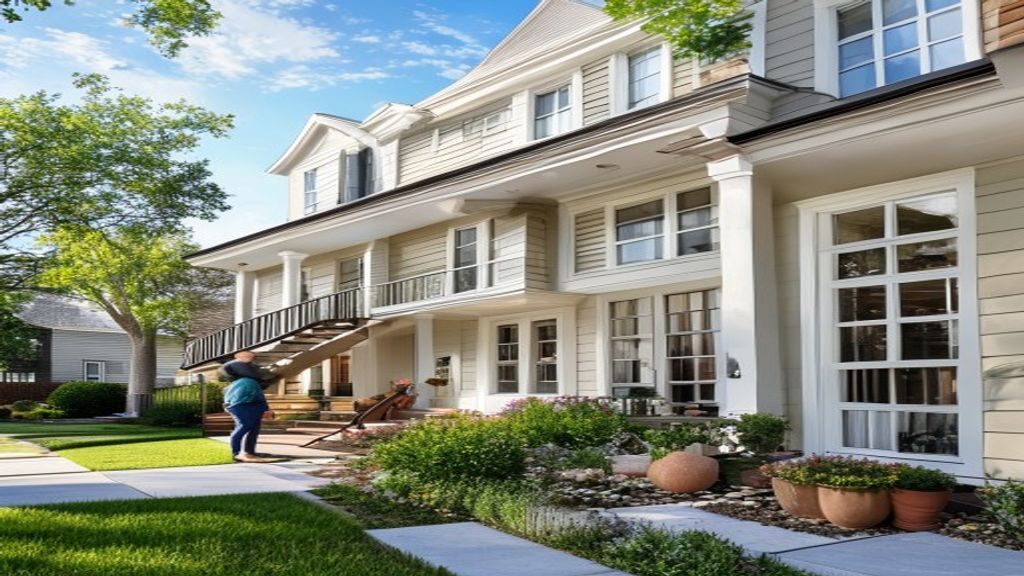
Exterior color is the one design decision your whole neighborhood sees every day — and the one that's most expensive to get wrong. A kitchen backsplash you dislike is a Saturday project; a house color you regret means renting lifts, re-prepping the whole envelope, and paying for the labor twice. After 37 years painting homes across West Babylon, Islip, Levittown, and the rest of Suffolk County, we've learned that the homeowners who love their color years later all did the same handful of things up front. Here's how to think it through before you commit.
Start with what you can't change.
The most common mistake is choosing a body color in a vacuum, then discovering it fights with the roof. Your exterior already has fixed elements that a paint color has to live alongside for decades: the shingle color, any brick or stone on the foundation or chimney, the front-door and window finishes, and often a stamped-concrete or paver walkway. Pull those together first.
Long Island housing stock leans heavily toward warm-toned architectural shingles — driftwood, weathered wood, and brown-black blends are everywhere. Those warm roofs make cool gray bodies read blue and slightly cold, especially under an overcast sky. Greige (gray with a warm base), soft taupe, and warm whites tend to sit more comfortably under our typical roof colors than a true cool gray does. Hold your paint chips up against the actual roof and brick, outdoors, before you fall in love with anything.
Long Island light is cooler and softer than the fan deck.
Paint stores are lit with bright, warm artificial light. Our coastal light is different — bluer, more diffuse, and frequently filtered through cloud cover coming off the water. A color that looked crisp and creamy in the showroom can turn stark or chalky on a gray November afternoon in Babylon.
The practical rule: whatever depth of color you think you want, the sun will wash it out a shade or two. Pale colors read paler; mid-tones read lighter. If you want a color to actually register as "sage" rather than "off-white with a hint of something," go a step deeper than feels safe on the chip. And remember the sides of your house get very different exposure — a south- and west-facing wall bakes and fades faster than a shaded north side.
Test big, test on the wall, and live with it for a week.
Two-inch chips are for narrowing down, not deciding. Once you're down to two or three candidates, buy sample pints and do this:
- Paint large swatches — at least 2 ft by 2 ft. Do it directly on the house (or on white poster board you can move) on more than one side, so you see the color in both sun and shade.
- Look at it at three times of day: morning, midday, and the golden hour before sunset. The color you see at 8 a.m. is not the color you'll see at 6 p.m.
- Check it in the rain. Long Island gets plenty of gray, wet days. A color you only ever judge in July sun is a color you've only half seen.
- Put the body, trim, and accent samples side by side. Colors shift depending on what's next to them — trim that looks bright white against a chip can look dingy against the actual body color.
The trim, the accent, and the "rule of three."
A balanced exterior usually reads as three coordinated colors: a body (the largest area), a trim (fascia, corners, window casings, soffits), and an accent (the front door, and sometimes shutters). Keeping it to three keeps the house from looking busy. Trim is most often a clean white or warm off-white; the accent is where you can have some fun with a deeper, more saturated color that only appears in small doses.
Sheen matters as much as color. Flat and matte finishes hide surface imperfections on older siding and stucco but hold dirt; satin and low-lustre are the workhorse choice for most Long Island bodies because they shed salt-laden grime and wash down easily. Trim and doors are usually taken up to semi-gloss so they pop and wipe clean.
Fit the neighborhood — and check before you assume you're free.
You don't have to match your neighbors, but a color should feel like it belongs on the street. Drive the block and notice what ages well next to your architecture. If you're in a community with a homeowners' association, or in one of Long Island's designated historic districts, there may be an approved palette or a review step before you can repaint — confirm that before you buy a drop of paint, not after.
When paint isn't the real fix.
Sometimes the honest answer is that fresh paint won't solve the problem. If your siding is failing — cracked, cupping, chalking heavily, or wood that's rotting behind the paint — a new color just puts lipstick on a bigger issue, and the finish won't last. In those cases it's worth comparing the cost of a quality exterior repaint against re-siding, since new siding can come pre-finished or in materials that never need repainting. A contractor should be willing to tell you which one actually makes sense for your house.
Take your time on this one. The best exterior color isn't the trendiest — it's the one that flatters your roof and brick, holds up to our coastal light and salt air, and still looks right to you five years from now. If you'd like a professional eye on prep, color placement, and whether paint or new siding is the smarter spend, learn more about our exterior painting services, or read our take on the best siding materials for Long Island homes if you're weighing a bigger exterior refresh.