Your pavers moved this winter in Bay Shore: what's actually happening underneath.
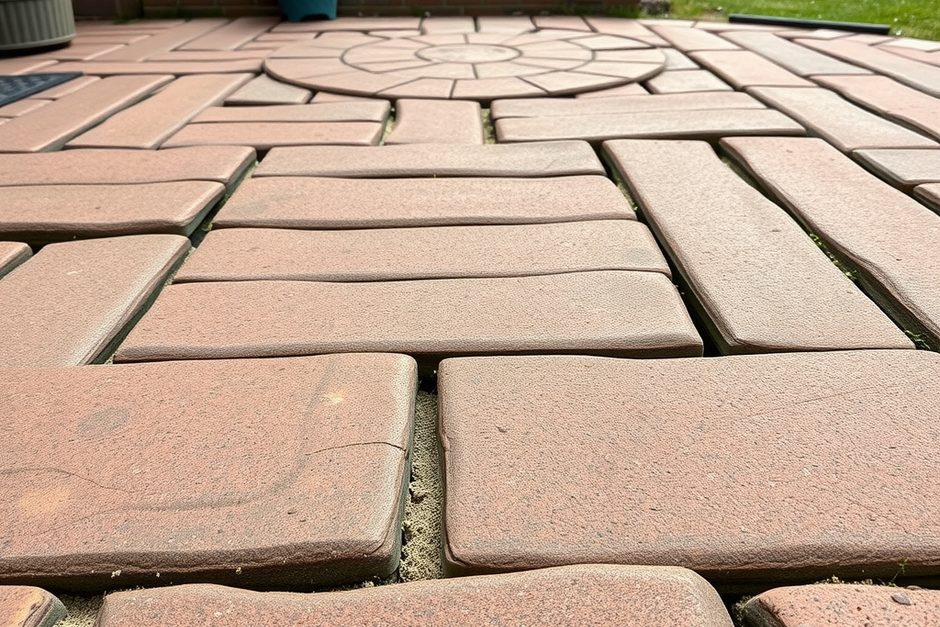
You walked out this spring and the patio wasn't flat anymore.
A paver patio that was flat last fall and uneven this spring didn't move on its own: a corner near the downspout dropped half an inch, the walkway picked up a lip, and a few pavers rock underfoot that never used to. That happened to the ground underneath, not the pavers, over an ordinary Bay Shore winter.
The patio is just the part you can see. What actually failed is underground.
Why a Long Island winter moves a patio that never moved before.
Pavers sit on compacted stone and sand, not a slab, which is what lets a crew level them without concrete, and also what lets them move when the ground underneath moves. Moisture in the soil freezes into ice that lifts the base unevenly, then thaws without fully settling back.
An ice lens forms faster under a low spot or a shaded corner than under the rest of the patio. A few hard freezes and thaws, which is an ordinary Long Island winter, can leave a patio that was flat in November reading uneven by March.
Sandy south-shore soil near Bay Shore and the Great South Bay drains fast, and that actually helps here, since standing water under a base does more damage than damp sand does. The bigger risk on a lot like that is usually disturbed fill rather than frost. A patio built within the last few years over backfill from an addition or a pool can still be settling on its own schedule, with nothing to do with winter at all.
A few pavers or the whole patio: it changes what you're looking for.
Isolated movement, one corner, one low spot, a run along a single edge, usually points to something local: a downspout dumping water at that exact corner, a low spot in the grading that collects runoff, or sand washed out of one joint that let its neighbors slide into the gap.
Walk the patio right after a hard rain and watch where the water actually sits. That's the spot doing the damage, not necessarily the spot that looks worst right now.
Widespread unevenness, the whole field reading wavy rather than just one area, points to the base itself. Either the stone was never compacted to the density it needed when the patio was built, or the patio sits over fill that's still working its way down. If the patio was installed over recent grading work, ask when: a few years old and still sinking usually means fill, not frost.
What's actually failing under there.
- Frost heave: ice lenses lifting the base unevenly through winter, then an uneven thaw that doesn't fully reverse it.
- Washed-out bedding sand: water finding a path under the pavers (usually from a downspout, a slope toward the patio, or a gap at the edge restraint) and carrying the leveling sand out from under the joints it's supposed to support.
- Under-compacted base: if the crushed stone base wasn't compacted in the lifts it should have been when the patio went in, it settles under its own weight and foot traffic over the first few seasons, winter or not.
- Settling fill: a patio built over backfill from a recent addition or pool install can keep sinking with that fill for a couple of years, independent of frost.
Resetting the pavers is the easy part. Fixing why fixes it.
Lifting the affected pavers, adding and re-compacting base where it's low, and resetting with fresh bedding sand gets a patio flat again in an afternoon. For a small, isolated dip, that's a perfectly reasonable repair on its own, no bigger job required.
What it won't do is stop the same spot from dropping again next winter if the water that caused it is still getting under there. That's why we check the downspout and grading before touching a single paver. Skip that step and the reset is a repair you'll be paying for again next year.
A patio that's uneven across most of its surface, rather than in one or two spots, is usually telling you the base needs to come up and get rebuilt properly rather than patched section by section. That's a bigger job, but it's the one that actually lasts, the way a correctly built base should for 20 years or more.
When a patio repair needs more than a reset, and the town's sign-off.
Most paver patio resets on Long Island don't need a building permit, since you're not changing the footprint or the height, just putting the surface back where it was. That changes once the repair raises the patio above grade, which is where the town's rules start to matter.
In the Town of Islip, a Building Division permit guide requires a patio permit once it sits more than 18 inches above grade, and a patio at 30 inches or more needs stamped plans from a registered design professional. That mostly comes up when a drainage fix means building the patio up on one side, not on an ordinary reset, but it's worth knowing the threshold exists before assuming any fix is automatically permit-free.
New York runs one Uniform Fire Prevention and Building Code statewide. The Department of State's Division of Building Standards and Codes notes that generally every town and county administers and enforces it locally, which is why the specific number above comes from Islip's own guide rather than a state one. Smithtown, Babylon and Huntington each publish their own version of the same question. Call the local building office before work starts if there's any doubt.
The right time to fix it is before next winter, not during it.
Fall is the better window for a paver reset on Long Island. The ground is workable, dry enough to show where water actually collects, and a base compacted now has a full season to settle before the next freeze tests it.
Waiting until spring thaw to assess the damage is fine, but putting off the fix past fall means working over frozen or saturated ground, which makes compaction harder to get right.
For a closer look at material choices if you're weighing a full rebuild rather than a repair, see our guide to brick paver driveways and patios, or visit our paver services page and patio construction page for what a rebuild involves.