Refinish or replace? A guide to tired hardwood floors on Long Island.
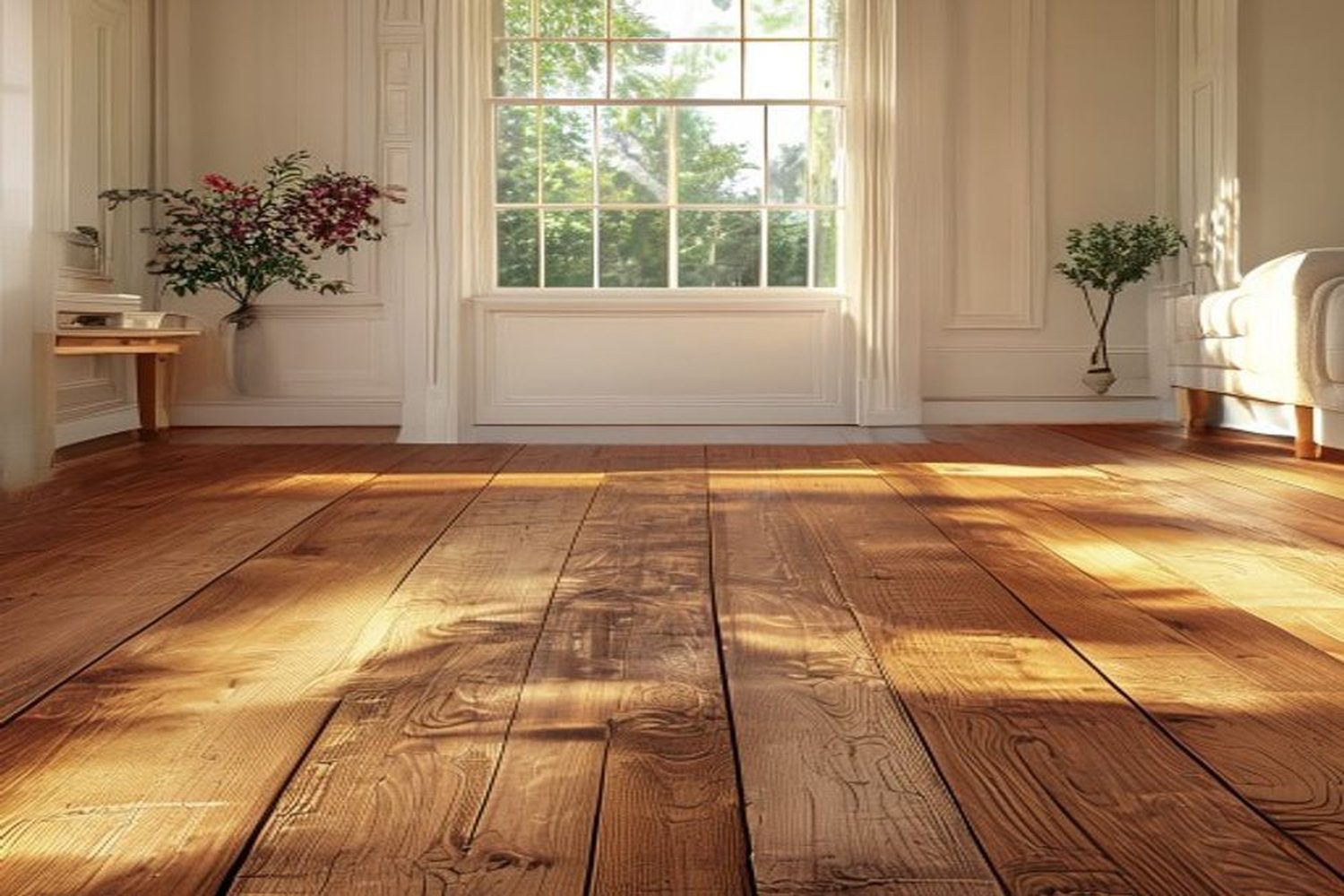
Almost every older Long Island home has hardwood somewhere — original red oak strip floors under the carpet in a Levittown cape, a wide-plank living room in a Bay Shore colonial, parquet in a mid-century ranch. Over the decades those floors dull, scuff, gray out at the traffic lanes, and pick up the odd water ring or pet stain. At some point you stop and ask the real question: can these be brought back, or are they finished?
The honest answer is that most tired hardwood floors can be saved — refinishing is one of the highest-value things you can do to an older home. But not every floor is a candidate, and the wrong call in either direction costs money. Here's how to tell which situation you're in.
First, figure out what you actually have.
Before you can decide anything, you need to know whether your floor is solid hardwood or engineered, because it changes everything about what's possible.
Solid hardwood is a single piece of wood, typically 3/4 inch thick on older Long Island homes. It can be sanded and refinished several times over its life — that's its whole advantage. Engineered wood is a thin veneer of real hardwood bonded over plywood. Depending on the thickness of that top veneer, it can be refinished once or twice, lightly — or not at all.
The easiest way to check: find a heating vent, a closet threshold, or a spot where the flooring meets a stair nosing, and look at the cut edge. Solid wood shows the same grain all the way down. Engineered shows distinct plywood layers. If you genuinely can't tell, that's exactly the kind of thing we'll confirm on-site before recommending anything.
The core question: how much wood is left to sand?
A full refinish means sanding off the old finish and a thin layer of wood, then applying new stain and polyurethane. Every refinish removes material, and there's a finite amount available above the tongue-and-groove joint. A 3/4-inch solid oak floor generally has enough for several sandings across its lifetime — but if a floor has already been refinished two or three times over 60 years, or was aggressively sanded by a previous owner, it may be near the end.
Signs a floor has little sanding life left:
- Exposed nail heads or visible tongue edges: If you can see the fasteners or the sides of the boards are cupping up to reveal the tongue, the surface has already been sanded very thin. Another aggressive pass could go straight through.
- Boards that flex or feel hollow underfoot: Thin, worn boards over an aging subfloor start to move. That's a structural conversation, not a cosmetic one.
- A history you can see: Multiple stain colors bleeding through, or a floor that's noticeably lower than the thresholds around it, both point to prior refinishing.
If there's healthy thickness left, refinishing is almost always the better value — you keep the original character and old-growth wood that you simply can't buy new today. If the wear layer is spent, you're looking at replacement, at least in the affected rooms.
Three levels of work — and when each one fits.
Not every tired floor needs the full treatment. There's a ladder here, and matching the right rung to your floor's condition is where you save real money.
- Screen and recoat (a "buff and coat"). If the finish is dull and lightly scratched but the wood underneath is sound and unstained, the floor can be lightly abraded and given a fresh coat of polyurethane — no deep sanding, no stain change. It's the fastest, least disruptive option and it dramatically renews a floor that's just worn on the surface. The catch: it only works if scratches haven't cut through the finish into the raw wood, and you can't change color this way.
- Full sand and refinish. When scratches reach bare wood, when there are stains and gray traffic patterns, or when you want a different stain color, the floor gets sanded to bare wood and completely refinished. This erases most surface damage and is where a floor truly looks new again. It's the most common route for original Long Island oak that's never been touched in decades.
- Replace (whole rooms or targeted repair). Reserved for floors that are structurally compromised, sanded past their limit, or damaged beyond what sanding removes. Replacement isn't always all-or-nothing — badly damaged boards can often be woven in and blended, though matching old wood to new is genuinely difficult and never invisible.
The damage that pushes a floor toward replacement.
Some problems sand right out. Others don't, and knowing the difference keeps you from paying to refinish a floor that was never going to come back.
Surface scratches, dents, and gray traffic lanes almost always disappear with a full sanding — these are the classic "looks hopeless but refinishes beautifully" cases. Deep gouges can sometimes be filled and blended, sometimes not, depending on depth.
Water damage and cupping is the big one on Long Island. Our humid summers, coastal moisture, and the occasional burst pipe or dishwasher leak cause boards to absorb water and swell at the edges — the "cupped," washboard look. If the floor has dried out fully and the cupping is mild, sanding it flat can work. But if boards have crowned, buckled, or lifted, or if the moisture is ongoing from below (a damp crawl space or basement is common in older Suffolk County homes), those boards need to be replaced and the moisture source addressed first. Sanding a floor that's still wet underneath just guarantees you'll be doing it again.
Pet stains are the other frequent dealbreaker. A surface stain sands away; a black stain that has soaked through the finish and penetrated deep into the grain has reacted with the wood and often won't sand out. Those boards usually have to be replaced and blended in.
Gaps between boards that open in winter and close in summer are normal seasonal movement, not a defect — Long Island's swing from dry heated winters to humid summers guarantees some of it. Permanent large gaps, though, can indicate boards that have shrunk past their useful life.
What drives the cost either way.
There's no flat rate for hardwood work, because condition varies so much floor to floor. What actually moves the number is the scope and the state of what's there. For refinishing, the big levers are square footage, how many rooms and how many transitions and closets have to be cut in by hand, whether you're doing a simple recoat or a full sand-stain-and-finish, the stain color and number of finish coats, and how much board repair or filling the floor needs before finishing. Stairs, when included, are labor-intensive and priced separately.
For replacement, the drivers are the material you choose (species, solid vs. engineered, plank width, prefinished vs. site-finished), the condition of the subfloor underneath, whether old flooring has to be torn out and hauled away, and how the new floor has to meet existing floors at doorways. In an older home, correcting an uneven or damp subfloor before new wood goes down is often part of the job.
Because all of that is specific to your house, we don't quote hardwood floors from a phone description. We'll come look, check the thickness and the subfloor, and put a free written quote in your hands. Call (631) 983-8079.
The bottom line for Long Island homeowners.
If you've got original solid oak with life left in it, refinishing is one of the best returns in home improvement — you're renewing wood you couldn't replace with anything as good. If the floor is sanded thin, structurally soft, or damaged beyond what sanding reaches, replacement is the honest call. Most of the time the answer becomes obvious once someone who does this work looks at the cut edge, checks the thickness, and reads the moisture underneath.
Just Enterprise One Corp. has been doing carpentry and flooring for Long Island homeowners since 1989, and we'll tell you straight which side of the line your floors fall on. If you're weighing your options, our wood flooring services and broader flooring work pages walk through what we install and refinish — and if you're still deciding on material for a room you're changing entirely, our guide to wood flooring vs. tile is a good next read.