Is it too late to paint outside? Long Island's real fall window.
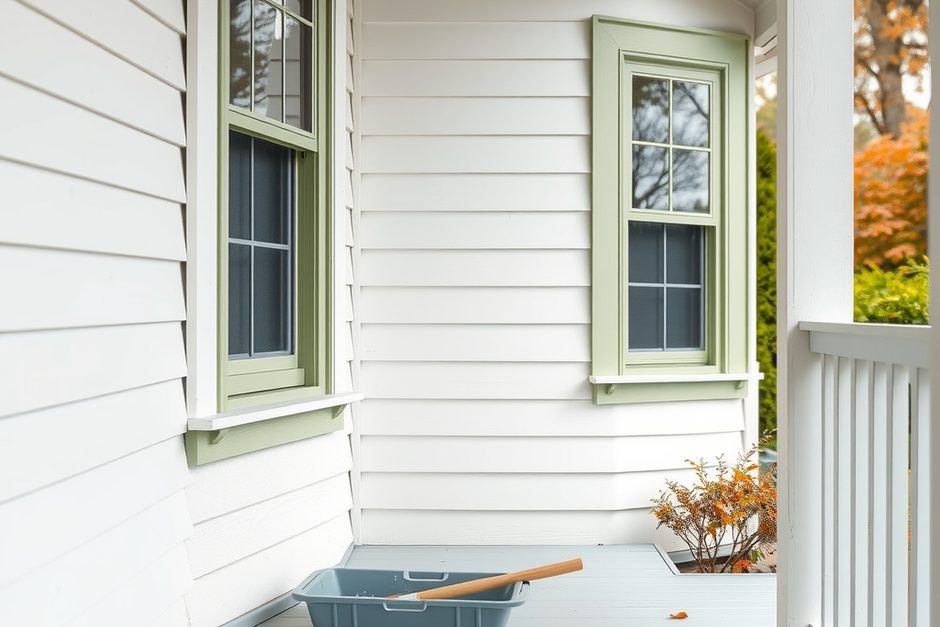
Start with tomorrow morning, not the calendar.
Late October can still work for exterior painting on Long Island, but the decision turns on the next dry window, not the calendar. A post-war cape in Babylon can look ready at lunchtime and still hold overnight dew in shaded trim, so the surface needs time to dry before the coating goes on.
Check the paint label first. Products have their own air and surface-temperature limits, and they also state how long they need before rain or dew. The wall can run cooler than the air, particularly on the north side of a 1950s ranch or behind trees. Check the shaded wall itself before setting up. If the forecast only meets the minimum for an hour or two, waiting is the safer choice.
Why overnight dew is the fall problem people miss.
Overnight dew is usually what ends the fall painting day on Long Island, not a dramatic cold snap. Moisture can sit in lap joints, window casing and the lower courses of siding even when the driveway looks dry, then interfere with adhesion or leave a finish that has not had the conditions it needed to set evenly.
Walk the shady elevation early in the day and look under trim returns, along caulk joints and where shrubs hold moisture against the wall. Do not treat a dry-looking face as proof that every detail is ready. A later start after the surface has dried is better than rushing to use every minute of a short autumn day.
- Watch the surface, not only the forecast: Siding and trim can lag behind the reported air temperature.
- Give the last coat time: Rain is not the only concern. Heavy evening damp can arrive before a fresh finish has settled.
- Plan around shade: A south-facing wall and a tree-covered side of the same house may not be ready at the same time.
When a fall paint job is still a good call.
A fall paint job still makes sense when the siding is dry, the product's temperature requirements are comfortably met and the forecast gives the work a real dry window. It is often a smart time to handle peeling trim or exposed wood before a Long Island winter keeps wet weather working at the same weak spots.
Preparation matters more as the season narrows. Loose paint needs to come off, bare areas need the right primer, and failed caulk needs attention before any finish coat hides the problem. Painting over a damp board or a soft section of trim does not buy a house another season. It only makes the repair harder to judge later.
When waiting for spring is the better decision.
Waiting is the better call when the forecast keeps brushing the coating's limits, damp mornings never clear on the wall you need to paint, or the prep exposes decay that needs carpentry first. Spring provides longer drying days and makes it easier to schedule the work as one complete system instead of trying to force small sections between wet spells.
That does not mean ignoring the exterior all winter. Photograph peeling areas, keep plants and stored items clear of the wall, and list trim, caulk and siding repairs while they are easy to see. If the issue is a gap around a window rather than paint failure, ENERGY STAR's homeowner guidance can help explain weatherization work before it becomes part of a larger exterior project.
Do not use paint to hide a wall problem.
Paint protects a sound, prepared surface. It does not correct siding that has lost its profile, trim that stays soft after a dry spell, or a recurring stain below a window. On older Long Island capes, those clues can point to a detail that needs repair before the finish work begins, especially after a wet autumn.
If a repair grows into replacement or changes the exterior assembly, ask the town building department what it wants before work starts. For broader efficiency planning, NYSERDA's homeowner resources explain the programs and home-energy services available in New York. That research is separate from a paint decision, but it can keep related work from being planned in the wrong order.
Make the call with a short site check.
The useful question is not whether it is fall. It is whether this house has a dry, warm-enough surface and enough stable weather for the coating you chose. A quick site check makes that a practical decision and is more reliable than choosing a date based on the season alone.
- Read the coating's application and drying requirements.
- Inspect the shaded walls and trim after the morning damp has lifted.
- Separate surface prep from repairs that need to happen first.
- Look at the next stretch of weather, including the evenings after each coat.
For more on choosing finishes that suit the exposure, see how Long Island light affects exterior color. If the prep points to failed boards or trim instead, start with what happens when a re-side uncovers rot, then contact us for a free written quote.